How is Holi different from Diwali?
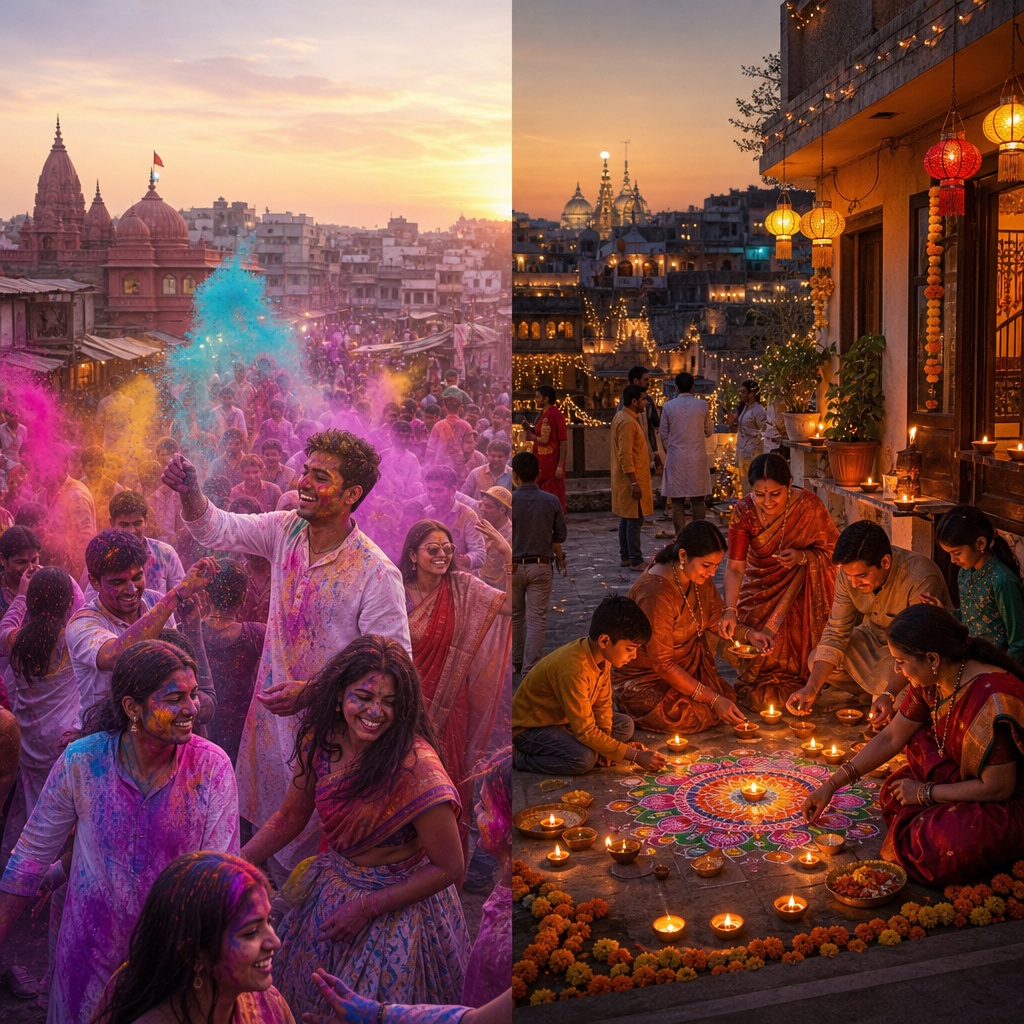
Holi and Diwali are two of India's best-known festivals, but they celebrate different ideas, seasons, and customs. Holi, known as the festival of colors, marks the arrival of spring and is primarily a social, outdoor celebration in which revelers throw colored powders and water, sing, dance, and share sweets in public spaces. Diwali, the festival of lights, is a multi-day celebration focused on home, family, and the triumph of light over darkness, featuring the lighting of diyas, decorating with rangoli, worship ceremonies, and the exchange of gifts and sweets. The timing and calendar behind each festival reflect distinct traditions: Holi is tied to the lunar calendar and typically occurs in March, while Diwali’s main day follows the new moon in the Kartika phase of the Hindu lunisolar calendar, with 2026’s main day on November 8. The rituals also emphasize different myths and values: Holi is associated with stories of Krishna, Radha, and playful devotion, while Diwali centers on Lakshmi, prosperity, and the home’s sanctity. The foods, clothing, and crowd dynamics vary, with Holi often more public and color-splashed, and Diwali more intimate and lantern-lit in many households. Both festivals are observed by many Indian communities and diaspora groups, though regional customs and safety practices differ.
Independently corroborated by other sources.